
Welcome to the world's most extensive apples (pommes) database.
Information on over 7,000 apples is available here, all carefully researched and provided in a way that is easy to navigate.
Apples with the use of ornamental
Joan
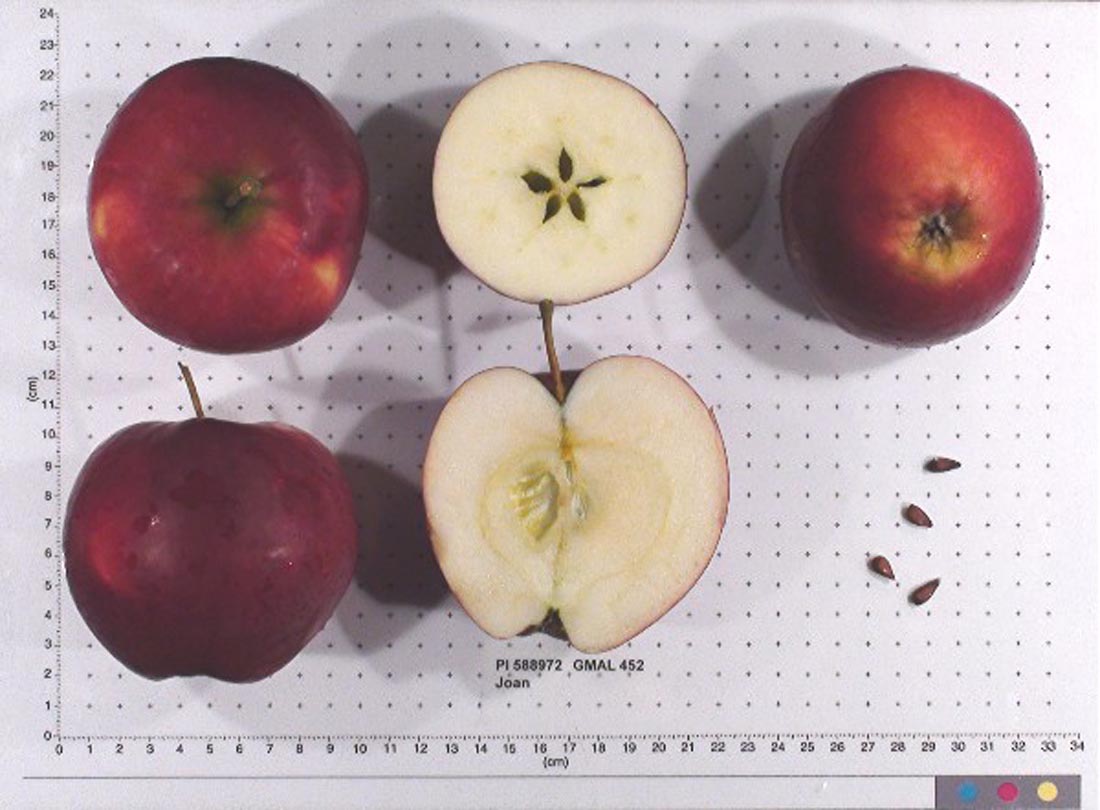
1
origins: Developed by crossing Anisim with Jonathan at Ames, Iowa (USA), introduced, 1932
John Downie

2
summary: Makes excellent apple jelly, can be used for cider and the tree is an excellent source of pollen over a two week span.
Jonsib Crab
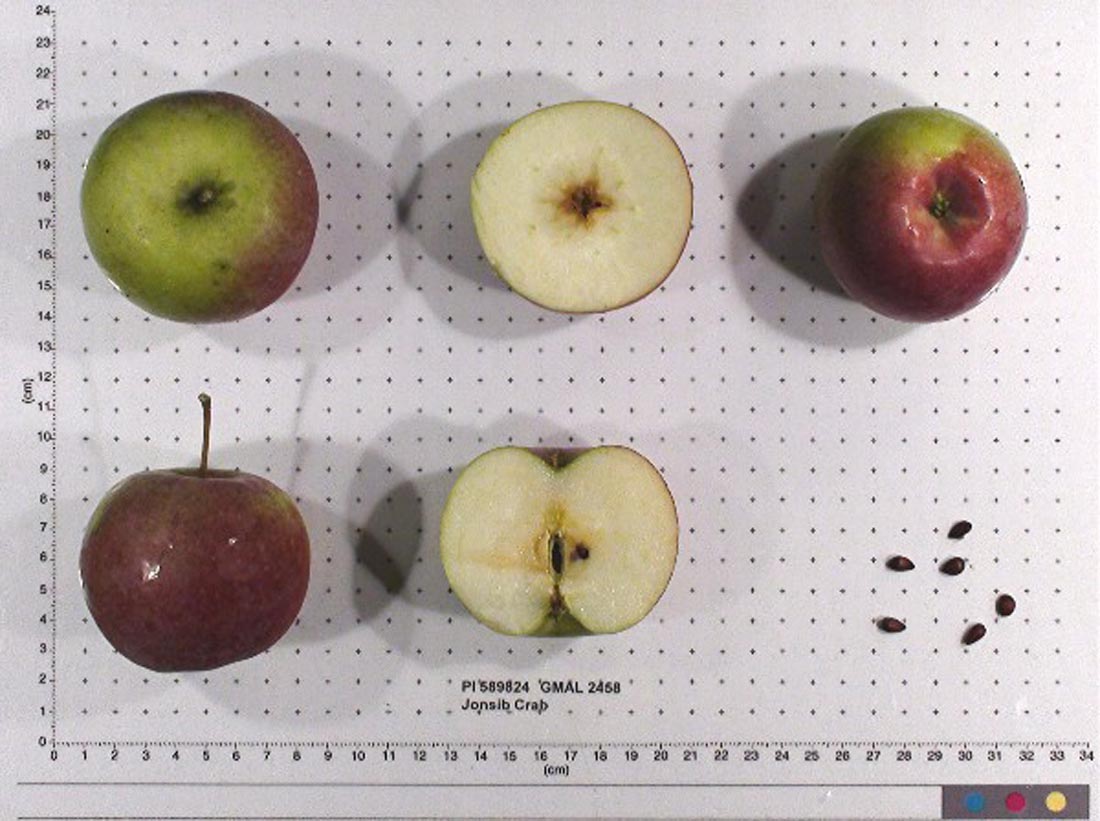
1
Katherine

1
summary: An ornamental crabapple tree that produces a heavy growth of pale pink double flowers in the spring and a crop of small green, blushed crabapples in the fall. ...

Kerr

1
summary: A tasty little apple for fresh eating, but best used for making excellent jelly. Also used as an ornamental crab, though the fruit drop can become a major ...
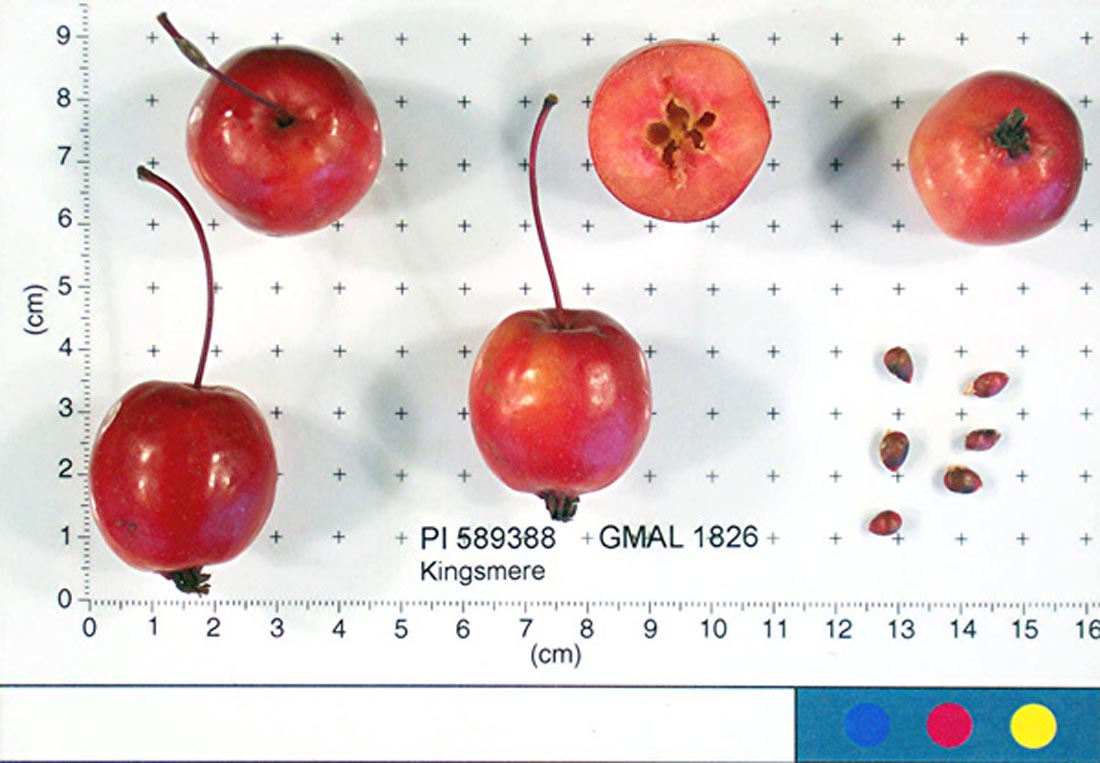
Kola

3
origins: Developed by Dr. Neils E. Hansen at the South Dakota Experiment Station in Brookings, South Dakota (U.S.A.) by crossing Elk River with Malus pumila Duchess. ...
Krasnyi Shtandart

characteristics: The flesh is pink. Very sharp. Keeps two months in cold storage.
Kuldzhinka Krupnoplodaya
characteristics: The flesh is white with pink stains under the skin and around the cone. Very sweet. Keeps two months in cold storage.
Landsberger Reinette (@3860)

1
summary: Developed in Northern Germany. Glossy, soft-fleshed, and redflesh apple.
Lanzam
summary: A dwarf flowering crabapple with white blossoms, small gold fruit which unfortunately is concentrated in the centre of the tree, reducing its visibility. Not ...
Donate a cider?