
Pomiferous
Welcome to the world's most extensive apples (pommes) database.
Information on over 7,000 apples is available here, all carefully researched and provided in a way that is easy to navigate.
Lord Lennox
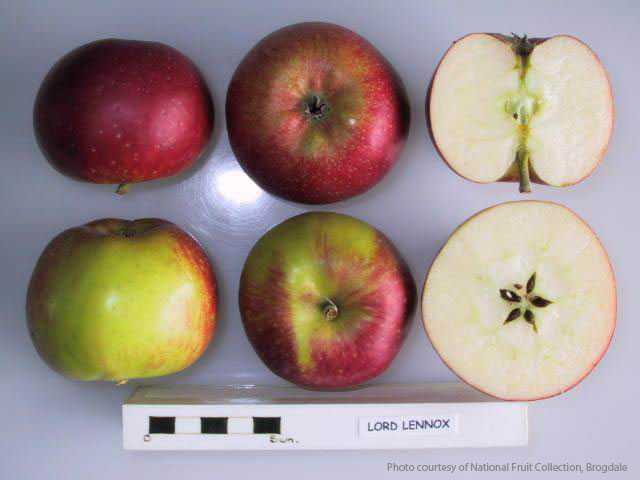
type: Dessert, Eating
summary: A Victorian dessert apple, grown extensively in England through the 1800s.
identification: Medium tending to small, round though sometimes flattened. The skin base colour is greenish yellow which is covered with a blush of bright red and darker red streaks on the sun-exposed face. Thin brown russet patches are sometimes present, particularly around the calyx which is small and closed, set in a shallow, ribbed basin. The stem is short, stout and set in a medium deep, narrow cavity, often with a fleshy swelling to one side.
characteristics: The flesh is yellowish, crisp, juicy and sweet-sharp. Aromatic.
origins: Likely arose in the Berkshire (U.K.) area during the first half of the 1800s and listed in the 1830 edition of "The Library of Agricultural and Horticultural Knowledge." Recommended as one of 12 apple varieties for a small garden by Henry Johnson in John Frederick Wood's 1847 edition of "The Midland Florist and Suburban Horticulturist." Continues to be available from Britain's National Fruit Collection.
cultivation: Moderately vigorous.
cold storage: Keeps two months in cold storage.
harvest: Ready for harvest in the middle of the fourth period.
notes: Similar to Fearn’s Pippin .
pollination group: B
pollination peak: 7
ploidism: Diploid. Self sterile.
cold storage weeks: 8
harvest period: 4
Donate a cider?
©2016-2021 Pomiferous.com. All rights reserved