
Pomiferous
Welcome to the world's most extensive apples (pommes) database.
Information on over 7,000 apples is available here, all carefully researched and provided in a way that is easy to navigate.
Wickson Crab
type: Culinary, Cider, Dessert, Jelly, Juice, Pollinization, Sauce
summary: Favoured for making crabapple jelly, partly because of a high pectin content. Excellent as a pollinator for other apples since it blossoms early, over a period of two weeks and the abundance of flowers produces large amounts of high grade, viable pollen. Also a favoured ingredient for making hard cider, particularly when blended with Virginia Crab and/or Harrison Crab .
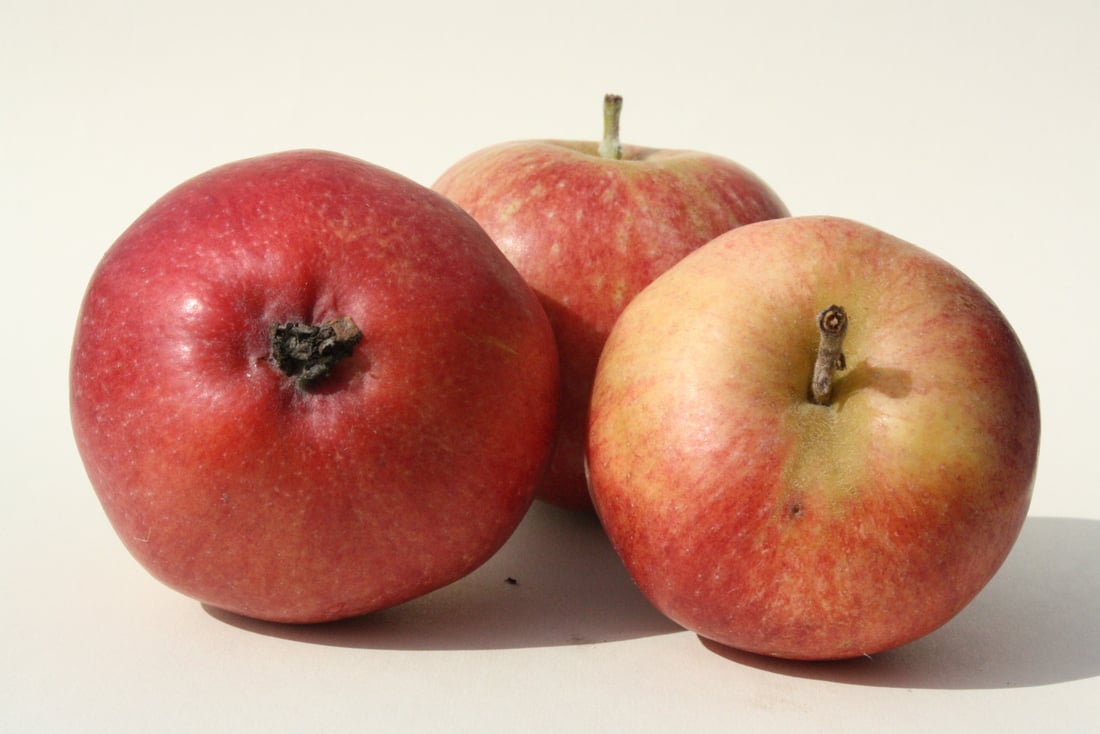
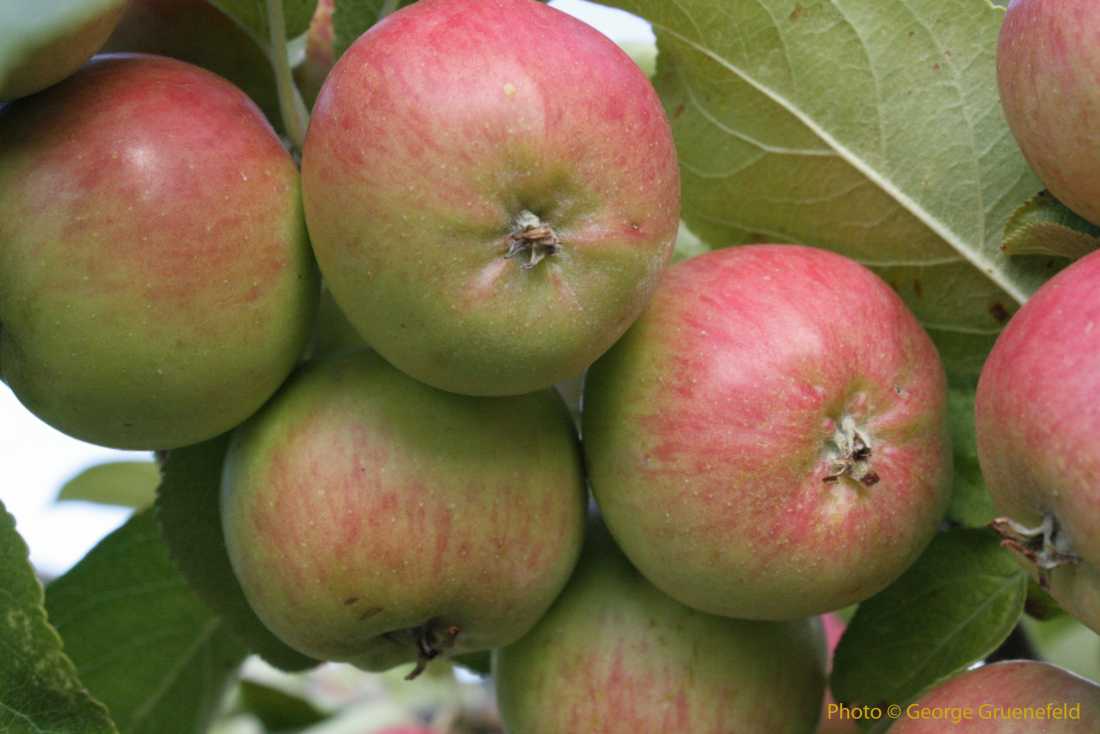
identification: Small to very small, usually about the size of a golf ball, round-conic. Yellow base colour washed red on the sun-exposed face and marked with an abundance of light-coloured lenticels. The stem is long, extending well over the shoulders of the apple and slender, set in a medium deep and somewhat wide, russetted cavity. The calyx is large and open, set in a shallow, corrugated basin.
characteristics: The flesh is white, firm. Juicy. Very sweet and quite tart and intensely flavoured. Spicy. When grown in cooler climates, the acidity tends to be more pronounced.
uses: Favoured for making crabapple jelly, partly because of a high pectin content. Also good as a pollinator for other apples since it blossoms early, over a period of two weeks and the abundance of flowers produces large amounts of high grade, viable pollen.
origins: Developed in the late 1920s by Albert Etter at Humboldt County, California (U.S.A.) and named for Etter's colleague, E.J. Wickson. Introduced in 1944. The parentage of the Wickson is somewhat obscure since Albert Etter's 1944 patent application for the Wickson states "The crab apple tree is a cross between the Newtown and Spitzenberg Crab." Research, however, has to date failed to reveal either solid clues to the existence of Newtown Crab or a Spitzenburg Crab. It is possible that the Wickson was the result of a Newton/Spitzenburg cross, though perhaps not the crab varieties as listed. Or the another apple was used in the cross breeding, perhaps the Transcendent Crab which, as Ram Fishman (www.greenmantlenursery.com) points out, was one of Etter's favourite breeding varieties. Whatever went into the making of the Wickson, the outcome was one fine, multi-purpose apple.
cultivation: Vigorous. Bears fruit on first and second year growth. Produces heavy annual crops. Hangs well, but sensitive to rain. On its own roots, it tends to grow quite large, so it needs to be grafted onto semi-dwarfing rootstock (Geneva tends to produce the best crops). Hangs well, but sensitive to rain.
cold storage: Keeps well for up to two months when grown in cooler climates, but becomes mealy and starts to rot rather quickly after harvest in hot areas.
vulnerabilities: Susceptible to scab, mildew, fire blight and cedar apple rust. There is a problem with cracking some years.
harvest: Toward the end of the fourth period or the start of the fifth. Hangs well but sensitive to rain.
notes: In the years that followed its release, a number of Wickson Crab trees were mislabelled Crimson Gold which is a lookalike variety also developed by Albert Etter but primarily considered a dessert apple. The confusion has been detrimental to the popularity of the Crimson Gold which is a medium size, flatter apple with more vivid colouration.
juice character: A good choice for cider, particularly when a moderate dose of acidity is needed, also useful for raising the Brix to boost alcohol content.
juice_classification: Sweetsharp
pollination group: C
pollination peak: 11
ploidism: Diploid. Self sterile.
cold storage weeks: 8
brix: 20
harvest period: 4
hardiness: 4
Donate a cider?
©2016-2021 Pomiferous.com. All rights reserved