
Pomiferous
Welcome to the world's most extensive apples (pommes) database.
Information on over 7,000 apples is available here, all carefully researched and provided in a way that is easy to navigate.
Orangenburg
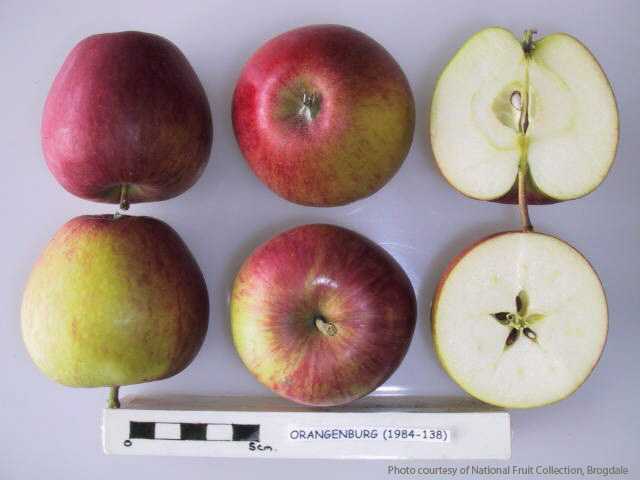
type: Dessert
summary: With a flavour and textures similar to its Cox parent, this German-bred apple ripens two to three weeks earlier. Needs shelter from the wind and fertile location. Best for hobby orchards, market sales and u-pick operations.
identification: Medium size and intermediate conic to full conic. The base colour is golden yellow over which is a dense pattern of red stripes on the sun-exposed face, more widely scattered on the shaded face. The calyx is somewhat small and tightly closed, set in a medium deep, small basin. The stem is medium to short and slender, set in a deep and somewhat narrow, lightly russeted cavity.
characteristics: The flesh is pale yellowish, firm and crisp. Juicy, sweet and sprightly. Aromatic, sweet and flavourful, but tends to be rather bland when grown in cool climates.
origins: A cross of Cox's Orange Pippin and Geheimrat Doktor Oldenburg developed at the Max Plank Institute in Cologne (Germany) in 1930. Introduced in 1973.
cultivation: Moderately vigorous, upright spreading tree. Bears fruit on spurs. Grows best in fertile soil and sheltered locations. A good choice for a hobby orchard, rather than a commercial orchard. Produces fruit annually, with somewhat lighter yields every other year.
cold storage: Keeps up to three months in cold storage. Develops an waxy surface when kept overlong in storage.
vulnerabilities: Very susceptible to canker. Also to fireblight.
harvest: Produces moderate harvests ready for picking starting late in the forth period.
pollination group: D
pollination peak: 14
ploidism: Diploid. Self sterile.
cold storage weeks: 12
harvest period: 4
Donate a cider?
©2016-2021 Pomiferous.com. All rights reserved