
Pomiferous
Welcome to the world's most extensive apples (pommes) database.
Information on over 7,000 apples is available here, all carefully researched and provided in a way that is easy to navigate.
Ashton Brown Jersey
type: Cider
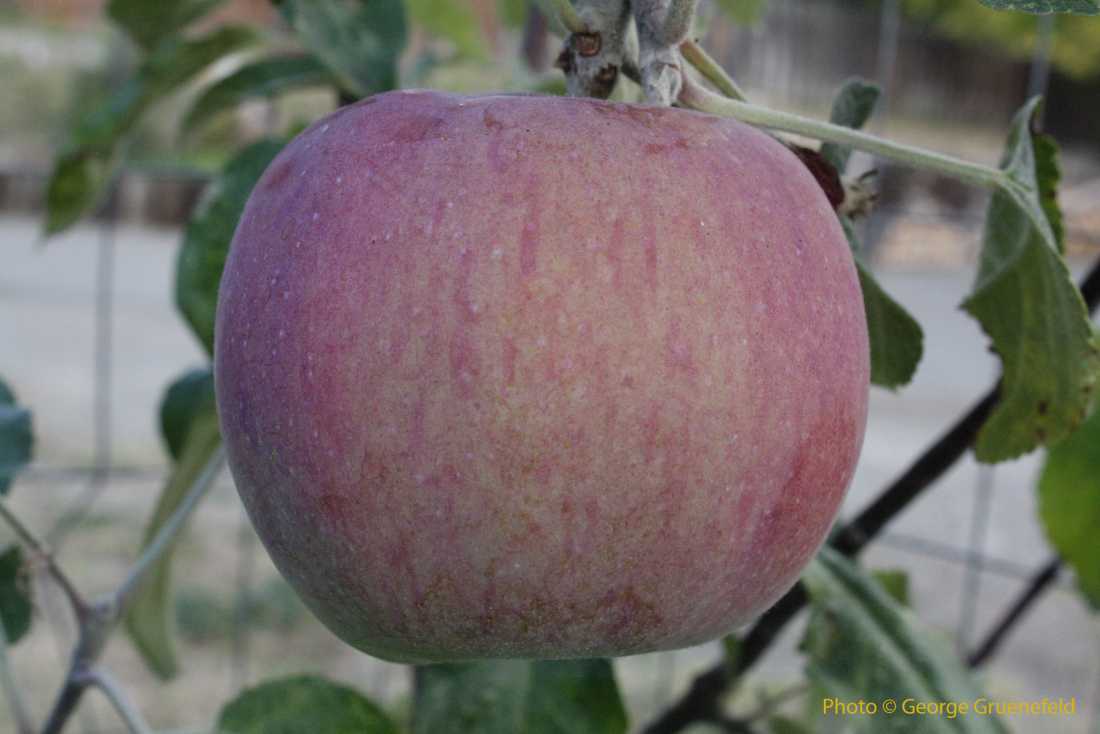
identification: Small to medium and sometimes large. Round. Yellow, washed deep red, almost purple and marked with a pattern of broken, fine red stripes, often covered with a network of brownish russet and marked with russeted lenticels. The calyx is large and open, set in a shallow and wide basin.
characteristics: The flesh has a wooly texture.
uses: Vintage cider, can be used to produce a full-bodied, bitter-sweet must.
origins: Developed at the National Fruit and Cider Institute at Long Ashton, Bristol (U.K.) in 1903. It was widely grown around Herefordshire during the first few decades of the 1900s, but subsequently became less widely distributed. It is however, regaining some resurgence thanks to the growth in popularity of ciders, especially British-style ciders.
cultivation: Moderately vigorous. Grows fruit on spurs. Produces well, but tends to be biennial. Young trees are slow to start producing fruit.
cold storage: Does not store well but needs to be sweated for a week or two.
vulnerabilities: Resistant to scab.
harvest: Late in the fifth period.
notes: Vintage cider, can be used to produce a full-bodied, bitter-sweet must.
juice character: Complex flavours. Tannin 0.23%, acidity , 0.1%.
juice_classification: Medium-bitter
pollination group: F
pollination peak: 20
ploidism: Diploid. Self sterile.
tannins: 2.3
harvest period: 5
Donate a cider?
©2016-2021 Pomiferous.com. All rights reserved